Can AI write my will?
Nah. A will has to meet your state's legal rules to be valid. Use AI to get organized, then use a lawyer or a reputable will service.
01Why nah
- Small signing and witness mistakes can make a will invalid.
- Rules differ by state and country.
- The cost of a mistake falls on your family.
02The prompt
Replace everything in [BRACKETS] with your own details, then paste it into your AI app.
Help me get organized before I make a will. Do NOT write the will itself.

My situation: [e.g. married, 2 kids, own a home, have a retirement account]

Give me:
1. A checklist of information to gather (assets, accounts, guardianship choices).
2. Plain-English meanings of terms like executor, beneficiary and guardian.
3. Questions to ask an estate lawyer or will service.
03Steps
- Use the checklist to gather information.
- Make the will with a lawyer or a reputable will service for your state.
- Store it safely and tell your executor where it is.
04What can go wrong
- An invalid will can mean state law decides for you.
05What to use
06Our test runs
2 runs, each with a different made-up sample. 2 of 2 passed every check.
The made-up sample:
[e.g. married, 2 kids, own a home, have a retirement account]Married to Jane, two children ages 8 and 12, own a 3‑bedroom house in Austin, TX, have a 401(k) with $120,000, and a small brokerage account with $15,000.
- Do NOT write the will itself
- Provide a checklist of information to gather
- Provide plain-English meanings of terms
- Provide questions to ask an estate lawyer
- Didn't make up details we never gave it
What came back (excerpt):
Here's the information you requested to help you get organized before making a will: ### 1.
Read the full answer
Here's the information you requested to help you get organized before making a will:

### 1. Checklist of Information to Gather:

- **Assets:**
  - Real estate properties (including your 3-bedroom house in Austin, TX)
  - Vehicles
  - Bank accounts (checking, savings, etc.)
  - Investments (401(k), brokerage accounts, etc.)
  - Life insurance policies
  - Other valuable items (jewelry, art, collectibles, etc.)

- **Accounts:**
  - List all bank accounts, investment accounts, and any other financial accounts
  - Include account numbers and institutions

- **Debts:**
  - List all debts (mortgages, car loans, credit cards, etc.)
  - Include the amount owed and to whom

- **Guardianship Choices:**
  - Decide on a guardian for your children in case you and your spouse are unable to care for them
  - Consider alternate guardians in case your first choice is unable to serve

- **Beneficiaries:**
  - Decide who you want to inherit your assets
  - Consider beneficiaries for your 401(k) and life insurance policies, as these often have separate beneficiary designations

- **Executor:**
  - Choose someone to manage your estate and carry out the instructions in your will
  - This could be your spouse, a trusted friend, or a professional

- **Funeral Arrangements:**
  - Consider making arrangements or leaving instructions for your funeral

- **Digital Assets:**
  - Make a list of your digital assets, including social media accounts, email accounts, and any other online presence
  - Consider who you want to manage these assets after your death

### 2. Plain-English Meanings of Terms:

- **Executor (or Personal Representative):** The person you choose to carry out the instructions in your will. They will be responsible for managing your estate, paying debts, and distributing your assets according to your will.

- **Beneficiary:** A person or organization that you choose to receive assets from your estate. Beneficiaries can be named in your will, but some assets like life insurance policies and retirement accounts have separate beneficiary designations.

- **Guardian:** A person you choose to care for your minor children if you and your spouse are unable to do so. The guardian will be responsible for the children's well-being, education, and financial support.

- **Testator:** The person who makes a will. In your case, you are the testator.

- **Estate:** All of the assets you own at the time of your death, including real estate, investments, personal property, and other possessions.

### 3. Questions to Ask an Estate Lawyer or Will Service:

- What are the legal requirements for a will in Texas?
- How do I ensure that my will is valid and enforceable?
- What are the advantages and disadvantages of having a will versus a trust?
- How do I choose an executor, and what are their responsibilities?
- How do I name beneficiaries for my assets, and what are the tax implications?
- What are the laws regarding guardianship in Texas, and how do I ensure my children are protected?
- How often should I review and update my will?
- What are the costs associated with creating a will, and are there any ongoing fees?
- Can you explain the probate process in Texas, and how can I minimize its impact on my estate?
- Are there any specific Texas laws or regulations I should be aware of when planning my estate?

Gathering this information and understanding these terms will help you make informed decisions when you create your will. Consulting with an estate lawyer or will service can provide personalized advice tailored to your situation and ensure that your wishes are carried out as intended.
Make sure the answer does not contain an actual will.
The made-up sample (a messier one):
[e.g. married, 2 kids, own a home, have a retirement account]Married to Alex (separated but not legally), 3 kids (ages 12, 9, and a teen who just moved out), co‑owner of a 1975 ranch‑style house with a mortgage, a 401(k) at Acme Corp, a small online business, a vintage car collection, and a partially funded college savings plan for the younger two.
- Do NOT write the will itself
- Provide a checklist of information to gather
- Explain executor, beneficiary, guardian in plain English
- List questions to ask an estate lawyer or will service
- Didn't make up details we never gave it
What came back (excerpt):
Here are the items you requested to help you get organized before making a will: **1.
Read the full answer
Here are the items you requested to help you get organized before making a will:

**1. Checklist of Information to Gather:**

* **Assets:**
	+ Real estate: address, value, and mortgage details of the 1975 ranch-style house
	+ Vehicles: make, model, year, and value of each vintage car
	+ Business: details of your small online business, including assets, liabilities, and income
	+ Retirement accounts: 401(k) account details, including balance and beneficiary information
	+ Other assets: cash, investments, jewelry, art, or other valuables
* **Accounts:**
	+ Bank accounts: checking, savings, and investment accounts
	+ Credit cards: outstanding balances and credit limits
	+ Loans: mortgage, personal loans, and other debt obligations
* **Guardianship Choices:**
	+ Names and contact information of potential guardians for your 12- and 9-year-old children
	+ Alternative guardians in case your first choice is unable to serve
* **Beneficiaries:**
	+ Names and contact information of beneficiaries for your 401(k) and other accounts
	+ Beneficiaries for your life insurance policies (if applicable)
* **Other:**
	+ College savings plan details for your younger two children
	+ Any outstanding debts or financial obligations
	+ Funeral or burial wishes
	+ Any specific gifts or bequests you want to make to individuals or charities

**2. Plain-English Meanings of Terms:**

* **Executor (or Personal Representative):** The person responsible for carrying out the instructions in your will, managing your estate, and distributing your assets according to your wishes.
* **Beneficiary:** A person or organization that receives a gift or inheritance from your estate, such as a family member, friend, or charity.
* **Guardian:** A person appointed to care for your minor children (in your case, your 12- and 9-year-old children) if you and your spouse are unable to do so.
* **Trust:** A legal arrangement where a trustee manages assets for the benefit of one or more beneficiaries, often used for minor children or to manage complex assets.
* **Power of Attorney:** A document that grants someone the authority to make financial or medical decisions on your behalf if you become incapacitated.

**3. Questions to Ask an Estate Lawyer or Will Service:**

* What are the laws and regulations in my state regarding wills, estates, and guardianship?
* How do I ensure that my separated spouse (Alex) is not automatically entitled to a portion of my estate?
* What are the tax implications of my estate, and how can I minimize them?
* How do I protect my minor children's interests and ensure their well-being if I pass away?
* What are the pros and cons of creating a trust for my children's college savings plan or other assets?
* How do I choose an executor, and what are their responsibilities?
* What are the costs and fees associated with creating a will and establishing an estate plan?
* How often should I review and update my will and estate plan to ensure it remains relevant and effective?

Remember, this is not a substitute for professional advice. It's essential to consult with an estate lawyer or will service to ensure your specific situation is addressed and your wishes are carried out according to your state's laws and regulations.
Make sure the answer never includes an actual will.
How each run works: we fill the prompt with a made-up sample, run it once in Llama 3.3 70B, and GPT-OSS 120B grades the answer against the prompt's own rules. Word limits are counted by code, and every quote flagged as made up is checked against the full answer. Your results can differ. How we test.
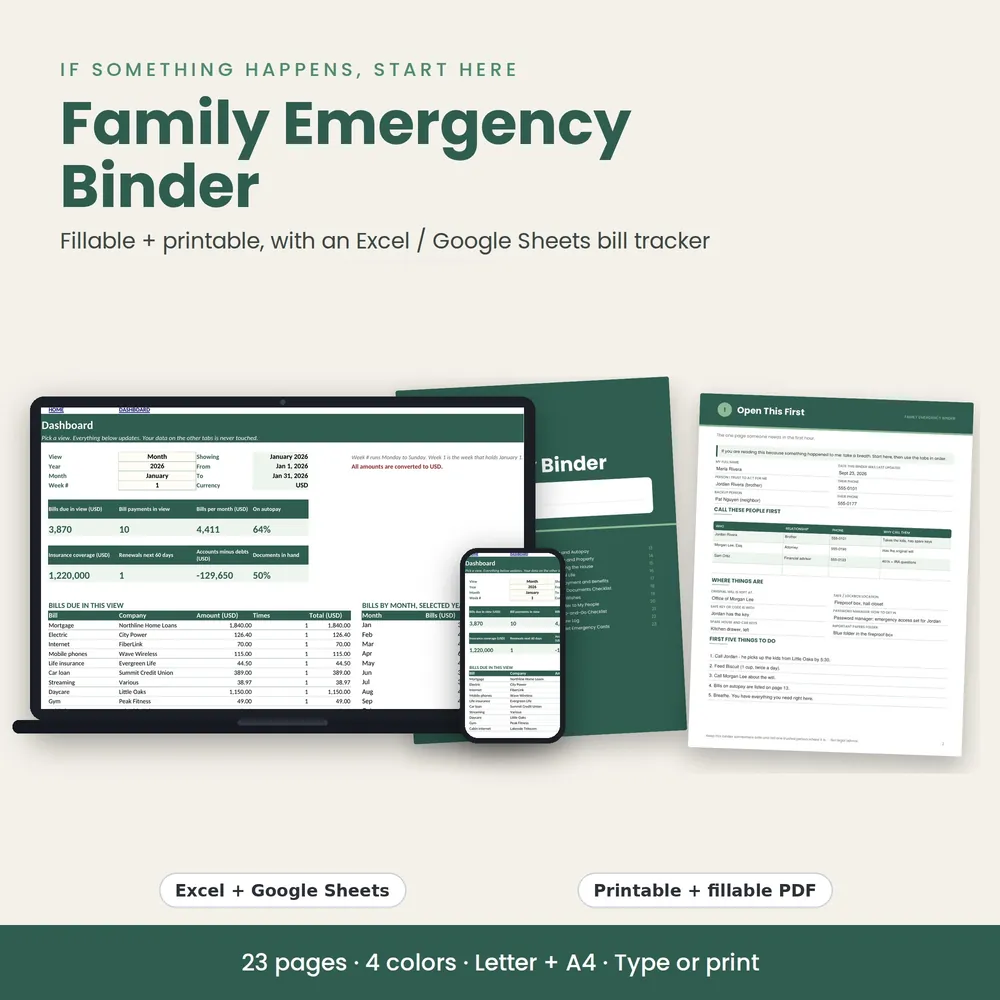
The binder your family needs if something happens to you. Printable + fillable PDF + workbook, $16.99.